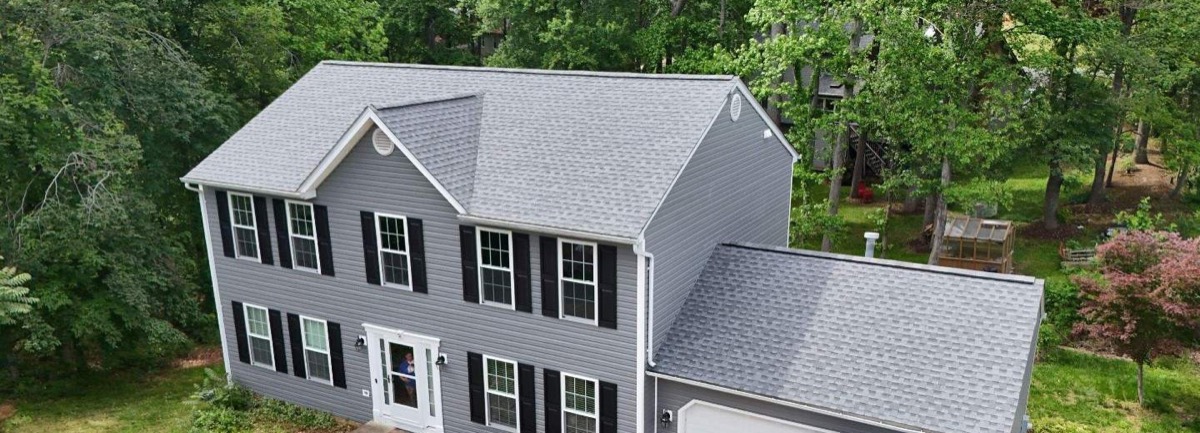
Hardie board vs vinyl siding comes down to upfront cost against long-term durability: vinyl costs less and needs little upkeep, while James Hardie fiber cement costs more, takes paint, and uses noncombustible boards. For a Fredericksburg home, the better pick depends on your budget, how long you plan to stay, and how well the siding is installed. That last point decides more jobs than the material does, because both manufacturers’ warranties exclude problems traced to poor installation.
Below we compare the two on price, weather, warranty, upkeep, safety, and permits. We install vinyl, James Hardie fiber cement, and LP SmartSide, and we will tell you plainly when the cheaper board is the right one. Each figure links to its source.
Key Takeaways
The Hardie board siding pros and cons, in short:
- JLC’s 2025 Cost vs. Value report averaged $21,485 for fiber cement and $17,950 for vinyl on a 1,250 square foot job. Treat that as a benchmark, since local whole-house quotes usually show a bigger gap.
- James Hardie backs its siding boards with a 30-year, non-prorated limited warranty, but its ColorPlus paint finish is covered for 15 years and the payout shrinks each year.
- Vinyl can distort when its surface reaches about 165°F, which darker colors and reflected glare can cause, and CertainTeed’s warranty excludes distortion from grills and reflected glare. Fiber cement boards are noncombustible, but the paint on them is not.
- Virginia’s state building code generally exempts siding replacement on a single-family home from a permit, but historic districts, flood zones, and high-wind areas can change that.
What Is the Difference Between Hardie Board and Vinyl Siding?
“Hardie board” is shorthand for the fiber cement siding made by James Hardie. Fiber cement is a composite of cement, sand, and cellulose fibers, according to OSHA’s fact sheet on cutting it. Vinyl siding is made from PVC and comes factory colored in a wide range of shades.
Fiber cement vs vinyl siding comes down to three questions: what you pay now, how much upkeep you will take on, and how the board handles heat, moisture, and freezing weather. You can see the brands we work with in our James Hardie, vinyl, and LP SmartSide siding options.
How Much More Does Hardie Board Cost Than Vinyl Siding?
Hardie board costs more up front. In JLC’s 2025 Cost vs. Value report, replacing 1,250 square feet of siding with factory-painted fiber cement averaged $21,485, while the same job in vinyl averaged $17,950. Treat those national averages as a benchmark only. The two jobs in the report are specified differently, since the fiber cement job includes trim boards and factory paint. On a whole house in the Fredericksburg area, local quotes usually show a larger gap than that.
The same report put resale value recouped at 114 percent for fiber cement and 97 percent for vinyl, again as national averages.
Your own quote will move with a few things:
- Wall area and complexity. More corners, gables, and windows mean more labor and trim.
- Finish choice. Fiber cement can arrive factory painted or primed for field painting, which changes both price and upkeep.
- What is behind the old siding. One customer who hired us for siding and gutters wrote on Google that repair work was necessary once the old siding came off.
The only number that matters is the quote for your house. Ask for both materials from the same contractor so the scope matches, request a free estimate, and look at financing options for exterior projects if the larger number is the sticking point.
Which Siding Holds Up Better in Fredericksburg Weather?
In a Hardie board vs vinyl siding comparison, neither material fails in Virginia weather when installed correctly, but they are stressed in different ways. NOAA’s 1991 to 2020 climate normals for Fredericksburg show about 43 inches of precipitation a year, roughly 101 days with a low at or below freezing, and only about 7 days when the high stays there. That works out to around 94 days a year when temperatures drop to freezing and climb back above it. Summers add about 41 days at 90°F or higher.
For vinyl, heat is the weak point. A Cardinal Glass technical bulletin, citing a Vinyl Siding Institute report, says vinyl siding can soften and visibly distort when the siding itself reaches approximately 165°F, and that darker colors absorb more solar energy and run hotter. CertainTeed’s vinyl warranty excludes distortion from barbecue grills and from reflection off windows and doors, so keep grills away from the wall. If you are replacing windows too, ask how new glass could reflect onto the siding.
For fiber cement, the paint and caulk joints take the beating. James Hardie says its siding is noncombustible and resists moisture damage, though the fire resistance does not extend to the paint on top. James Hardie also makes a line for its colder zones (HZ5) and another for hotter ones (HZ10), and its ZIP code chart places Fredericksburg-area ZIP codes in HZ5. Confirm that the line going on your house matches your ZIP code.
Does Installation Matter More Than the Material?
Often it does, because both manufacturers write installation quality into their warranties. James Hardie’s ColorPlus finish warranty excludes damage from failing to follow its published installation instructions and the building code, and CertainTeed’s vinyl warranty excludes improper installation as well. Ask any contractor how they handle flashing and trim caulking before you sign.
On paper, James Hardie vs vinyl siding warranties are closer than most homeowners assume. Here is what the manufacturers’ own documents say:
- James Hardie siding boards: a transferable 30-year, non-prorated substrate limited warranty. That is a warranty on the product, not a promise of how long the siding will last.
- James Hardie ColorPlus factory finish: 15 years against peeling, cracking, and chipping, with the payment reduced each year from the second year on, so it is effectively prorated. It covers the first owner and first transferee and excludes mold, mildew, and water infiltration.
- CertainTeed vinyl siding (one of the vinyl brands we install): a lifetime limited warranty that is non-prorated for the original homeowner of a single-family house. Later owners get a 50-year prorated warranty, and fade protection does not transfer.
Warranty terms change by install date, so ask for the version that applies to your job. On lifespan, our siding page puts vinyl at 20 to 40 years with proper care. James Hardie sells a 30-year warranty on its boards instead of a lifespan, so we do not put a number on fiber cement. It depends on the installation, the upkeep, and what is behind the wall.
What Maintenance Does Each Siding Need?
Vinyl needs less. CertainTeed’s care guide says dirt and chalk come off with a garden hose and soapy water. Its warranty is voided if the siding is painted over the factory finish, so the day-one color is the one you live with.
Fiber cement asks for more attention. James Hardie recommends washing every 6 to 12 months with a hose and soft brush, and warns that acid and high-pressure washing can damage the surface. Failed caulk at joints and trim should be replaced with paintable latex caulk, and chipped paint touched up with 100 percent acrylic paint. That upkeep is the main trade-off with Hardie board: you get a paintable, noncombustible board, and a maintenance routine that vinyl mostly skips.
Do Pests and Moisture Change the Choice in Virginia?
Somewhat, but less than you might expect. James Hardie says its siding holds no appeal for woodpeckers or termites. A Virginia Tech Extension publication explains that subterranean termites usually enter a house from the soil along the foundation. In our view, that means pest-resistant siding protects the siding, not the framing behind it.
Moisture works the same way: water behind either material can damage the sheathing underneath. If rotted trim is part of the picture, we can handle soffit and fascia replacement in the same project.
Is Fiber Cement Safe to Cut and Install?
Yes, when the crew uses the right dust controls. OSHA’s fact sheet explains that cutting fiber cement with a high-speed saw can release respirable crystalline silica dust, and it describes controls such as a saw with vacuum dust collection and a high-efficiency filter. James Hardie states there is no dust concern once the siding is installed. That dust is a good reason to leave fiber cement to a crew with the right equipment.
Do You Need a Permit to Replace Siding in Virginia?
Often no, but check first. Under the state building code, 13VAC5-63-80 exempts replacement of an unlimited amount of siding on a single-family home from a permit, as long as the home is not in an area where the nominal design wind speed exceeds 100 mph. The same section lets a local building official require a permit in a locally designated historic district and for exempt work in a special flood hazard area.
Exterior changes in Fredericksburg’s historic district go through the city’s Architectural Review Board, so start there before you pick a material. Whether your home is in the city or in Spotsylvania County, call your local building office before ordering, and check your HOA covenants, since an association can set its own rules for exterior materials.
Which Should You Choose: Hardie Board vs Vinyl Siding for Your Home?
Match the material to how you will use the house. Vinyl makes sense when:
- Budget is the main constraint, since vinyl costs less up front.
- You may sell within a few years and want a low-maintenance exterior.
- You want no repainting and no caulk schedule.
Hardie board makes sense when:
- You plan to stay for many years and want a board that takes paint.
- You want a noncombustible board, for example near an outdoor kitchen, while still keeping grills and fire pits well away from any siding.
- You are willing to wash the siding, replace caulk, and repaint as the finish ages.
When we visit a home, we look at the wall behind the old siding, the sun exposure, and how long you plan to stay, then give you an honest recommendation, including when vinyl is the better value. We install siding across Fredericksburg, Stafford County, and Spotsylvania County.
Frequently Asked Questions About Hardie Board vs. Vinyl Siding in Fredericksburg, VA
These are the questions Fredericksburg homeowners ask us most when they compare the two materials.
Which adds more resale value, Hardie board or vinyl siding?
In JLC’s 2025 Cost vs. Value report, fiber cement recouped 114 percent of its cost at resale and vinyl 97 percent. Those are national averages, and the fiber cement job in the report included trim boards and factory paint, so do not read them as a promise for your house. If you may sell soon, the lower up-front cost of vinyl can be the better value.
Does Hardie board need to be painted?
Yes, it needs a painted surface, applied at the factory or in the field. James Hardie’s ColorPlus factory finish carries a 15-year warranty against peeling, cracking, and chipping, and the payment shrinks each year after the first. Plan on washing, replacing caulk, and touching up or repainting as the finish ages.
Can vinyl siding melt from a grill or reflected sunlight?
Yes. CertainTeed’s care guide says rigid vinyl can melt or burn when exposed to a significant source of flame or heat, and its warranty excludes distortion from barbecue grills and reflection from windows and doors. Keep grills well away from the wall.
Is Hardie board fireproof?
Hardie board is noncombustible. James Hardie states that its siding complies with ASTM E136 as a noncombustible cladding and will not burn. That fire resistance does not extend to the paint or coatings on top of it, though, so the finish can still char.
Schedule Your Free Siding Consultation
If you are deciding between Hardie board and vinyl for your Fredericksburg home, schedule your free consultation with Columbia Contracting LLC and we will give you a straight answer.