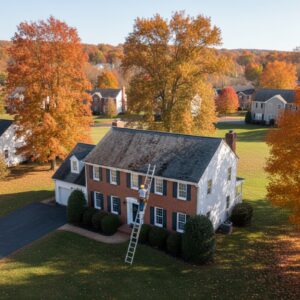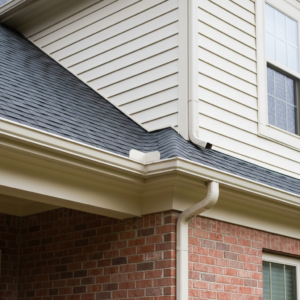
For most Fredericksburg homes surrounded by mature trees, the answer to “are gutter guards worth it” is yes: a well-matched guard cuts down on clogs, overflow, and the water damage that follows. For a home with little tree cover, a single-story roofline, and gutters that are easy to reach, the math is much closer, and twice-a-year cleaning may be all you need. The right answer depends on what falls on your roof, how your gutters are built, and which guard you choose. Below we cover the real tradeoffs, typical installation costs, how guards behave in a Virginia winter, and how to tell whether your home is a good candidate. As a family- and minority-owned exterior contractor based in Fredericksburg, Columbia Contracting LLC installs seamless gutters and gutter guards across the region, and these are the questions we walk through on every consultation.
Key Takeaways
Here is the short version before we get into the details:
- Gutter guards pay off fastest on homes with heavy tree cover, steep or two-story rooflines, and a history of overflowing or sagging gutters.
- Micro-mesh guards handle pine needles and fine debris best, while basic screens and foam inserts tend to clog sooner and need more upkeep.
- A 2026 This Old House survey of 1,000 homeowners put the average professionally installed price at about $39.71 per linear foot, with a median project of $5,000.
- Gutter guards do not cause ice dams. Ice dams start with heat escaping through the attic, so insulation and ventilation matter more than the guard itself.
What Do Gutter Guards Actually Do?
A gutter guard is a cover or insert that lets rainwater into the gutter while keeping leaves, twigs, seed pods, and roof grit out. When debris builds up inside an open gutter, water has nowhere to go. It spills over the front edge, soaks the ground next to your foundation, and backs up under the roof edge, where it can rot the fascia board and the roof decking behind it.
Guards address that one problem: clogging. They do not fix gutters that are undersized, pitched the wrong way, or pulling away from the house. If your current gutters leak at the seams or sag between hangers, a guard placed on top will not solve it, and replacing the gutter run first is usually the better investment. Our comparison of seamless vs. traditional gutters covers that decision in more detail.
When the gutters themselves are in good shape, a quality guard keeps them flowing, which protects the fascia, siding, landscaping, and foundation. Whether gutter guards are worth it for you comes down to how often that flow gets blocked.
What Are the Main Types of Gutter Guards?
The types of gutter guards on the market vary widely in price, durability, and how well they handle the debris common around Fredericksburg.
Micro-Mesh Guards
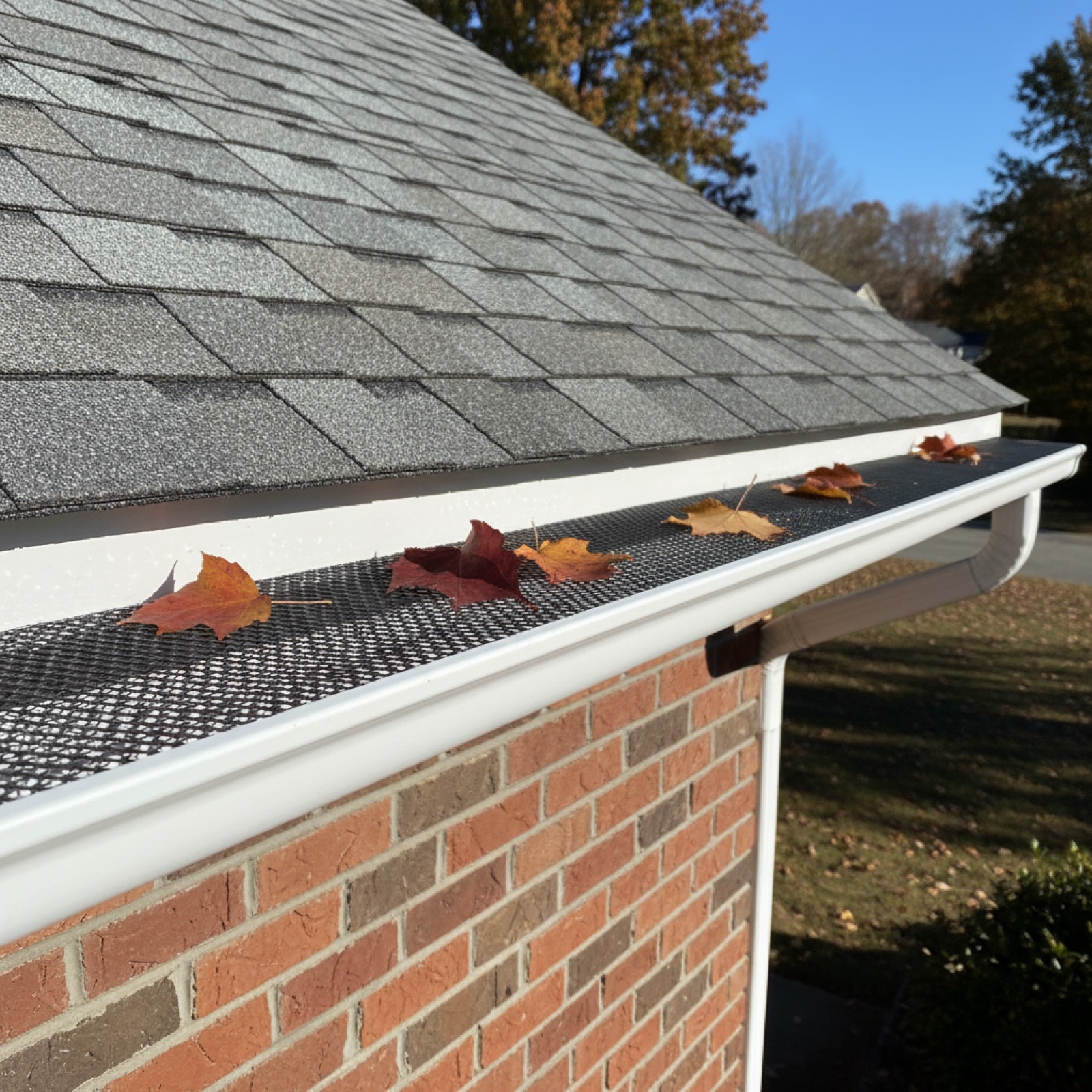
Micro-mesh guards use a fine stainless steel or aluminum mesh stretched over a rigid frame. The openings are small enough to stop pine needles, shingle grit, and the small seed pods that maples and tulip poplars drop each spring. They are typically the most effective option for heavily wooded lots and one of the more expensive ones.
Reverse-Curve (Surface Tension) Guards
These solid covers curve over the front of the gutter, and water follows the curve into a slot while leaves slide off the edge. They work well with large, flat leaves like oak and maple. On steep roofs, heavy downpours can sheet water past the curve.
Screens and Perforated Covers
Plastic or metal screens with larger openings are the budget option. They block big leaves but let pine needles, small twigs, and seeds through. They make sense on homes with light tree cover.
Foam and Brush Inserts
Foam blocks and bristle brushes sit inside the gutter channel. They are inexpensive and easy to install, but they trap fine debris, can grow moss or seedlings in a humid Virginia summer, and generally need to be pulled out and cleaned or replaced every few years.
How Much Does Gutter Guard Installation Cost?
Gutter guard installation cost depends on the guard type, the total linear footage of your gutters, the height and pitch of the roof, and whether the existing gutters need repairs first. According to This Old House’s 2026 survey of 1,000 homeowners, professionally installed guards averaged about $39.71 per linear foot, with a median total project cost of $5,000 and the middle half of respondents paying between roughly $4,100 and $6,000.
Several factors move that number up or down for a typical Fredericksburg home:
- Guard type. Micro-mesh and reverse-curve systems cost more than screens or foam inserts but last longer and need less attention.
- Linear footage. A ranch home in a Spotsylvania subdivision might have half the gutter length of a two-story colonial with multiple rooflines.
- Roof height and access. Two-story and steep roofs take more time and safety equipment to work on.
- Gutter condition. Loose hangers, leaking seams, or rotted fascia need to be addressed before a guard goes on.
The fairest way to weigh the price is against what you spend now. Paying for professional cleaning twice a year, plus any repairs caused by overflow, adds up over the many years a quality guard is built to last. Financing is also available through Foundation Finance and Enhancify if you would rather spread the cost into monthly payments.
Do Gutter Guards Cause Ice Dams?
Do gutter guards cause ice dams? This is one of the most common concerns we hear each fall, and the short answer is no, because the root cause sits in the attic. As a University of Missouri Extension specialist explains, ice dams form when warm air from inside the house leaks into the attic and warms parts of the roof. Snow melts on those warm sections, runs down to the colder overhang, and refreezes into a ridge of ice that traps more water behind it.
Gutters, with or without guards, sit at the bottom of that process. An ice-filled gutter can add weight and make a dam more noticeable, and a solid cover can briefly hold a layer of snow on top. Neither creates the heat loss that starts the problem. Fredericksburg winters bring frequent freeze-thaw swings, so attic insulation and ventilation are where the real prevention happens. We break down the difference in our guide to how gutter ice dams differ from roof ice dams.
If your home has had ice dams before, mention it during your consultation so we can check the eaves and soffit vents before recommending a guard.
Which Fredericksburg Homes Get the Most Value From Gutter Guards?
Gutter guards earn their cost fastest on homes where cleaning is frequent, difficult, or risky. Run through this checklist to see where your home falls:
- Count the trees. If oaks, maples, or pines hang over or near your roof, you are cleaning gutters more than twice a year or should be.
- Look at the roof height. Two-story homes and steep pitches make ladder work dangerous, and a fall is far more costly than any guard.
- Check for overflow stains. Streaks down the siding, washed-out mulch beds, or puddles along the foundation point to gutters that are already clogging.
- Inspect the fascia. Soft, peeling, or rotted fascia boards behind the gutters often mean water has been spilling over the back edge for a while.
Neighborhoods built among older hardwoods along the Rappahannock and across Spotsylvania and Stafford counties tend to check most of these boxes. Newer single-story homes with young landscaping often do not, and a routine cleaning schedule may be the smarter spend there.
What Are the Downsides of Gutter Guards?
Any honest answer to whether gutter guards are worth it has to include the drawbacks.
- They still need some maintenance. Debris can collect on top of mesh, and pollen or roof grit can coat fine screens. Expect an occasional rinse or brush-off, especially after heavy leaf drop.
- Installation matters for your roof. Some guards slide under the first row of shingles. If that is done carelessly, it can lift or crack the shingles and create a new leak point, so the installer should understand the roof as well as the gutter.
- They do not replace a good gutter system. A guard on a sagging or undersized gutter will still overflow during the heavy summer storms that roll through central Virginia.
If storm winds have already bent or torn off sections of your gutters, our storm damage repair team can assess what needs to be repaired before any guard is installed.
So, Are Gutter Guards Worth It for Your Home?
For homes with heavy tree cover, tall or steep roofs, or a history of overflow and fascia rot, gutter guards are usually worth it, provided you choose a quality guard and the gutters underneath are sound. For homes with little debris and easy access, the savings are smaller, and the money may be better spent elsewhere on the exterior.
Here is how we approach the decision with homeowners. We start with a free consultation at your home, where we look at the trees around the property, the condition and size of your existing gutters, the pitch of the roof, and any signs of water damage at the fascia or foundation. If the gutters are in good shape, we will recommend a guard matched to your actual debris. If they are leaking or undersized, we will explain your options for seamless gutter and gutter guard installation in Fredericksburg. If the fascia behind the gutters is rotted, we can handle soffit and fascia replacement in the same project so the new system is anchored to solid wood. Every job is backed by our workmanship warranty along with the manufacturer warranties on the materials.
Many of our gutter projects come alongside roof work, whether that is residential roofing in Spotsylvania County or residential roofing services in Culpeper County, and pairing the two lets us make sure the roof edge, drip edge, and gutters work together from day one.
Frequently Asked Questions About Gutter Guards in Fredericksburg, VA
These are the questions Fredericksburg homeowners ask us most often about gutter guards.
Do gutter guards cause ice dams?
No. Ice dams form when heat escaping from the living space warms the roof, melting snow that then refreezes at the colder eaves. Gutter guards sit below that process and do not create it. An ice-filled gutter can make a dam more visible, but the fix is better attic insulation and ventilation. If your home has had ice dams before, have the attic and roof edge checked before adding guards.
What is the best gutter guard for pine needles?
Micro-mesh guards are generally the best choice for pine needles. Their openings are fine enough to stop needles from slipping through, which is where standard screens and perforated covers tend to fail. Needles may collect on top of the mesh, but they usually dry out and blow off, or can be cleared with a soft brush from the ground with an extension pole.
Do you still have to clean gutters with gutter guards?
You will clean far less often, but not never. Most guards need an occasional check, especially after heavy fall leaf drop or a spring pollen season. Fine grit from shingles and small debris can still collect over time. Plan on a quick inspection once or twice a year in place of a full scoop-out of packed leaves and sludge.
Can gutter guards handle heavy summer downpours in Virginia?
Quality guards installed on properly sized gutters handle most storms well. Problems usually come from undersized gutters, too few downspouts, or steep roofs where water sheets past the guard. On larger or steeper roofs, upgrading to wider gutters and larger downspouts alongside the guard helps the system keep up during intense central Virginia thunderstorms.
Can installing gutter guards damage my shingles?
It can if the installer is careless. Some guard styles tuck under the first row of shingles, and lifting those shingles the wrong way can crack them or break the seal. Ask how the guard attaches, whether it touches the shingles at all, and whether the installer is familiar with your roofing manufacturer’s requirements before work begins.
Schedule Your Free Gutter Consultation
If clogged gutters, overflow stains, or rotting fascia are showing up around your home, schedule your free consultation with Columbia Contracting LLC and we will tell you honestly whether gutter guards make sense for your Fredericksburg home.